
Home Oxygen Concentrators: A Practical Guide to Choosing the Right Equipment
Choosing the right oxygen concentrator starts with understanding your needs. Discover the differences between home and portable oxygen concentrators, including the Drive DeVilbiss iGo2, and learn what to consider before buying. Explore Mobiquip’s home oxygen range online or visit our Frenchs Forest, Baulkham Hills or Mittagong showrooms.
Understanding portable and home oxygen concentrators, how they work and what to consider before buying.
For people who require supplemental oxygen, having the right equipment can make everyday life more manageable. Whether it's relaxing at home, visiting family or getting out and about, modern oxygen concentrators offer practical options for people receiving oxygen therapy.
Mobiquip now offers a range of home and portable oxygen concentrators, available to purchase online or through our showrooms in Frenchs Forest, Baulkham Hills and Mittagong.
But what exactly does an oxygen concentrator do, and how do you choose the right one?
What is an oxygen concentrator?
An oxygen concentrator is an electrically powered medical device that takes in surrounding air, removes much of the nitrogen and delivers oxygen-enriched air to the user.
What's the difference between a home and portable oxygen concentrator?
Home oxygen concentrators generally provide continuous oxygen flow and operate from mains electricity. Portable oxygen concentrators are smaller, battery-powered devices designed for greater mobility. Many portable models deliver oxygen in pulses rather than continuously.
Can I buy an oxygen concentrator without a prescription?
Mobiquip offers oxygen concentrators for purchase online and in store without requiring a prescription at checkout. However, oxygen therapy should be guided by a healthcare professional who can determine whether oxygen is needed and the appropriate delivery settings.
Can I travel with a portable oxygen concentrator?
Yes, certain portable oxygen concentrators are designed for travel. Always check the manufacturer's specifications and the requirements of your airline or transport provider.
Unlike traditional oxygen cylinders, which store a limited supply of compressed oxygen, an oxygen concentrator produces oxygen-enriched air from the surrounding atmosphere.
The machine draws in room air, filters it and separates out much of the nitrogen before delivering concentrated oxygen through suitable tubing and a nasal cannula.
There are two main types:
Stationary oxygen concentrators, designed primarily for regular use at home.
Portable oxygen concentrators, designed for greater flexibility when travelling or spending time away from home.
Both have advantages, but they are not necessarily interchangeable.
| Feature | Home Concentrator | Portable Concentrator |
|---|---|---|
| Primary use | Regular home use | Outings and travel |
| Power | Mains electricity | Rechargeable battery and external power |
| Oxygen delivery | Generally continuous flow | Often pulse dose |
| Portability | Usually moved on castors | Designed to be carried |
| Main benefit | Continuous oxygen supply at home | Greater freedom of movement |
The most important consideration is whether the machine can deliver oxygen in the manner and quantity required by the individual.
For someone requiring regular oxygen therapy at home, a stationary oxygen concentrator may be an appropriate choice.
These machines generally operate from a standard electrical outlet and provide continuous oxygen flow while running.
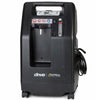
Mobiquip offers the Drive DeVilbiss Compact oxygen concentrators, available in 5-litre-per-minute model.
Key features include:
Continuous-flow oxygen delivery
Adjustable flow controls
Oxygen monitoring and alarm systems
Integrated handles and castors
Designs suitable for regular home use
The 5L and 10L models offer different maximum oxygen delivery capacities. Choosing between them should be based on clinically assessed oxygen requirements rather than simply selecting the larger machine.
Explore Drive DeVilbiss Home Oxygen Concentrators
For people who require supplemental oxygen while travelling, shopping or visiting family and friends, a portable oxygen concentrator can offer greater flexibility.
Unlike traditional oxygen cylinders, portable concentrators produce oxygen-enriched air from the surrounding atmosphere and operate using rechargeable batteries.
One option available from Mobiquip is the Drive DeVilbiss iGo2 Portable Oxygen Concentrator.
The iGo2 is designed to provide portable oxygen delivery in a compact, lightweight unit.
Its features include:
Lightweight construction: Approximately 2.25 kg, making it practical to carry when out and about.
Five pulse-dose settings: Settings from 1 to 5 to accommodate different clinically assessed requirements.
SmartDose technology: Automatically adjusts oxygen delivery in response to changes in breathing patterns.
Rechargeable battery: Provides mobility away from mains electricity.
Compact design: Suitable for everyday outings and travel.
Travel-friendly construction: Designed to meet applicable aircraft equipment standards, subject to airline approval.
The iGo2 delivers oxygen using pulse-dose technology.
Rather than supplying a continuous stream of oxygen, it delivers measured amounts when the machine detects inhalation.
Importantly, pulse-dose settings are not equivalent to continuous-flow litres per minute. For example, setting 2 on a portable concentrator does not necessarily provide the same oxygen delivery as 2 litres per minute from a stationary machine.
A healthcare professional should confirm that the device and its settings are appropriate, including during physical activity.
For customers seeking a portable oxygen solution, the iGo2 offers a practical alternative to larger stationary equipment, provided its delivery capabilities meet their clinical requirements.
Explore Oxygen Concentrators at Mobiquip
This is the most important starting point.
Oxygen therapy is not simply a matter of choosing a machine and turning up the flow until it feels comfortable.
A medical assessment can establish whether supplemental oxygen is appropriate, how much is required and when it should be used.
Breathlessness alone does not necessarily mean someone needs oxygen therapy.
Will the concentrator remain beside a chair or bed at home? Or does the user need to take it to appointments, shopping centres or family gatherings?
A stationary machine may suit someone who primarily requires oxygen at home, while a suitable portable model can provide additional flexibility.
Some people may need different equipment for different situations.
Not all concentrators deliver oxygen in the same way.
Continuous-flow machines deliver oxygen at a steady rate, while pulse-dose models deliver measured amounts triggered by breathing.
These delivery methods are not directly interchangeable. Confirm suitability with the treating healthcare professional before purchasing.
Stationary concentrators require electricity, so it's important to consider what happens during a power outage.
Portable concentrators require battery charging, and battery life varies depending on the model, settings and battery fitted.
For people who depend on oxygen therapy, an appropriate backup supply and emergency plan should be discussed with their healthcare team.
Oxygen concentrators are medical devices and require appropriate care.
Depending on the model, this may include:
Cleaning or replacing filters as instructed
Replacing nasal cannulas and tubing when required
Maintaining rechargeable batteries
Following recommended servicing intervals
Responding promptly to alarms or warning indicators
Understanding these requirements before purchasing helps avoid unexpected costs and interruptions.
Home oxygen therapy can be used safely when equipment is appropriate, correctly maintained and operated according to clinical advice and the manufacturer's instructions.
However, oxygen-enriched environments significantly increase fire risk.
Important precautions include:
Never smoke or vape near oxygen equipment.
Keep oxygen away from naked flames, gas appliances and other ignition sources.
Avoid oils, grease and petroleum-based products around oxygen equipment unless specifically approved.
Keep concentrator ventilation openings clear.
Position tubing to minimise trip hazards.
Have a plan for power failures or equipment faults.
Always follow the manufacturer's safety instructions and your healthcare team's advice.
Yes. Mobiquip offers oxygen concentrators for purchase through our online store, with the option of shopping in person at one of our three showrooms.
Before purchasing, we recommend confirming the type of oxygen delivery and settings required with your treating healthcare professional.
Our team can assist with understanding product features, portability, accessories and the practical differences between available models.
We do not determine oxygen therapy requirements or prescribe flow settings.
Mobiquip supplies homecare and mobility equipment through three NSW showrooms:
Frenchs Forest – Serving Sydney's Northern Beaches and surrounding areas.
Baulkham Hills – Serving the Hills District and north-western Sydney.
Mittagong – Serving the Southern Highlands, including Bowral and surrounding communities.
Customers can also browse and purchase oxygen concentrators online through the Mobiquip website.
Please contact your preferred showroom before visiting to confirm which models are available to view.
Choosing oxygen equipment involves more than comparing prices or machine sizes.
The right device needs to suit both your clinical oxygen requirements and the practical realities of everyday life.
At Mobiquip, we can help you compare the features of home and portable concentrators, understand the differences between models and choose equipment that matches the requirements identified by your healthcare professional.
Browse Home Oxygen Equipment at Mobiquip
Or visit our showrooms in Frenchs Forest, Baulkham Hills or Mittagong.
Mobiquip — Mobility. Made Personal.
Important information: This article provides general equipment information only and is not medical advice. Oxygen therapy, including the required delivery method, flow settings and duration of use, should be determined by an appropriately qualified healthcare professional. Do not start, stop or adjust oxygen therapy without clinical guidance.


